
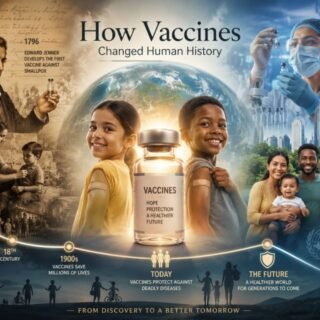
How vaccines changed human history
There was a time when diseases such as smallpox, polio and measles cast a long shadow over everyday life. Families lived with the constant fear of outbreaks, and illnesses that are now largely preventable claimed millions of lives across generations. Few could have imagined that one scientific breakthrough would forever change the course of human history.
The story began in 1796 when English physician Edward Jenner developed the first successful vaccine against smallpox. His pioneering work laid the foundation for modern immunization and ultimately led to one of humanity’s greatest public health achievements, the global eradication of smallpox in 1980. Today, it remains the only human infectious disease to have been eradicated through vaccination.
Since then, vaccines have helped control or significantly reduce the spread of diseases such as polio, measles, diphtheria, tetanus, hepatitis B, and cervical cancer caused by the human papillomavirus (HPV). According to #UNICEF, vaccines have saved an estimated 154 million lives over the past 50 years, making them one of the most effective and cost-efficient public health interventions ever developed.
Beyond preventing illness, vaccination programmes reduce healthcare costs, protect vulnerable populations through community immunity, and enable healthier, more productive societies. They have allowed children to grow up healthier, supported economic development, and improved quality of life across generations.
As scientific innovation continues to advance, vaccines remain at the forefront of disease prevention. Their legacy is not only measured in lives saved, but also in the healthier communities they continue to build, demonstrating that one of the greatest tools in medicine is also one of the most enduring investments in humanity’s future.
Biocon Dr. Reddy’s Laboratories Cipla Eli Lilly and Company AstraZeneca Novo Nordisk Novartis Lupin SUN PHARMA Johnson & Johnson Innovative Medicine Merck Group Sanofi